
Several non-banking financial companies (NBFCs) are observing an increase in early-stage delinquencies within their micro, small and medium enterprises (MSME) loan portfolios, primarily driven by supply chain disruptions and escalating raw material costs exacerbated by the ongoing conflict in West Asia.

A prolonged supply shock can transmit to lower incomes, and dampen confidence and sentiment, warns Aditi Nayar, chief economist, head-research and outreach, ICRA.

Suzuki Motorcycle India Ltd (SMIPL) has revised its domestic two-wheeler sales growth estimate for FY27 downwards from 7-8 per cent, citing rising commodity costs due to the ongoing West Asia conflict and its impact on consumer affordability.

Indian equity benchmark indices Sensex and Nifty rallied in early trade, driven by reports of a second round of talks between the US and Iran, which are fostering hopes for a resolution to the West Asia conflict, coupled with Brent crude oil prices trading below the USD 100 per barrel mark.

Indian stock markets experienced a significant sell-off, with the Sensex tumbling over 1,300 points, driven by escalating crude oil prices due to US-Iran tensions and Prime Minister Narendra Modi's call for austerity measures, which amplified investor concerns about India's economic outlook.

Even if there is an early agreement on a cessation of hostilities in West Asia, the price shock will not go away easily, points out A K Bhattacharya.

Indian equity benchmark indices experienced a significant drop in early trade, with the BSE Sensex falling over 525 points and the NSE Nifty down more than 164 points, primarily due to rising crude oil prices and ongoing uncertainty surrounding the US-Iran conflict.

India's pharmaceutical industry is experiencing increased bulk drug prices, particularly for APIs from China, following the escalation of the West Asia crisis in March. While current inventories provide a temporary buffer, concerns are mounting over the availability of key solvents and feedstocks, potentially leading to manufacturing disruptions and shortages in specific drug categories.

The ongoing West Asia conflict is expected to severely impact the supply of affordable housing in India, as rising input costs further erode already thin developer margins. Fluctuations in crude oil and gas prices, coupled with higher freight costs, are driving up prices of essential construction materials like cement and steel, making new projects increasingly unviable for developers.
Indian equity benchmark indices, Sensex and Nifty, tumbled nearly 2 per cent for the fourth consecutive session, driven by elevated crude oil prices, escalating US-Iran tensions, unabated foreign fund outflows, and a depreciating rupee.
Indian equity benchmark indices, Sensex and Nifty, tumbled nearly 2 per cent for the fourth consecutive session, driven by elevated crude oil prices, escalating US-Iran tensions, unabated foreign fund outflows, and a depreciating rupee.

Indian benchmark indices Sensex and Nifty experienced volatility due to conflicting developments in West Asia, including reports of the Strait of Hormuz closure, which led to a rebound in crude oil prices and heightened investor concerns about supply disruptions and inflation.
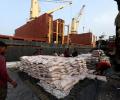
The Federation of Indian Export Organisations (FIEO) has appealed to the Reserve Bank of India (RBI) for liquidity support to Indian exporters, citing a significant increase in freight costs and extended payment cycles due to the ongoing West Asia conflict.
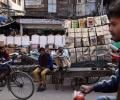
Moody's Ratings has downgraded India's growth forecast for financial year 2026-27 (FY27) to 6 per cent from 6.8 per cent, attributing the revision to weaker consumption and industrial activity, elevated energy prices, and rising input costs stemming from the West Asia conflict.

Markets will look for clear guidance on how the MPC interprets the uncertainty and what it implies for the future course of monetary policy, points out Rajeswari Sengupta.

India's fiscal deficit is projected to reach 4.5 per cent of GDP for the current fiscal year, exceeding the budgeted target, as the government's policy responses to the West Asia conflict are expected to strain public finances, according to research firm BMI.

The ongoing conflict in West Asia is severely disrupting Bikaner's food exports, causing delays, rising costs, and impacting the supply of popular snacks like bhujia and papad to Gulf and European markets.
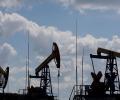
India's wholesale price inflation surged to 3.88 per cent in March, marking the fifth consecutive monthly increase, primarily driven by a sharp rise in crude petroleum, natural gas, and manufactured items amidst the West Asia crisis.

Despite initial pressure from the West Asia conflict, analysts are optimistic about the Indian hospital sector's outlook, citing strong demand drivers and ongoing expansion plans that are expected to fuel significant revenue growth over the next few years.

'Travellers are considering safer and more stable destinations.'

The Indian rupee depreciated by 52 paise to settle at 93.35 against the US dollar, driven by failed US-Iran peace talks, surging crude oil prices due to a potential US blockade of Iranian ports, and a global flight to the greenback. This geopolitical uncertainty is also leading to foreign capital withdrawal from domestic equities.

Asian Development Bank (ADB) on Friday warned that India's limited crude oil reserves of about 100 million barrels - sufficient for only 40-45 days of consumption - leave the country particularly vulnerable to supply disruptions through the Strait of Hormuz amid the ongoing war in West Asia.

Tejal Hasanbis's impactful half-century and Prema Rawat's leg-spin helped India A defeat Bangladesh A by 46 runs in the ACC Women's Asia Cup Rising Stars final.

Fast-moving consumer goods (FMCG) companies are closely monitoring crude oil prices and considering low single-digit price increases, while consumer durables firms have already begun passing on significant price hikes to consumers due to rising input costs exacerbated by the West Asia conflict.

Indian realty developers are contemplating price increases for ongoing and upcoming projects to offset margin pressures caused by rising input costs and supply chain disruptions, exacerbated by the West Asia conflict. Input and labour costs have surged by 5-12%, directly impacting developer margins, especially for under-construction projects.

The conflict may disrupt Budget 2026-2027 projections, squeezing revenues and raising subsidies, prompting fiscal adjustments and potential reforms, echoing lessons from the Covid-era shock, points out A K Bhattacharya.

The Confederation of Indian Industry (CII) has proposed a 20-point policy agenda to the finance ministry, including a conflict-linked emergency credit line guarantee scheme and tax rationalisation on energy inputs, to support MSMEs, exporters, and energy-intensive industries affected by the ongoing West Asia war.

Analysts warn that global markets are significantly underpricing the risk of an oil price shock, with Brent crude potentially soaring to $150 per barrel if the West Asia conflict escalates or damages critical oil and gas infrastructure. This could lead to severe inflation and economic repercussions, particularly for import-dependent nations like India.

India's foreign secretary Vikram Misri on Thursday participated in a high-level meeting hosted by the United Kingdom on the evolving situation in West Asia, underlining concerns over maritime security, energy supply disruptions and the need for diplomatic de-escalation.

India's fertiliser subsidy bill for the current financial year (FY27) is projected to increase by approximately 20% due to surging global prices, primarily driven by the West Asia crisis, a senior official confirmed. Despite this, retail prices for urea and di-ammonium phosphate (DAP) will remain unchanged, ensuring adequate supply for the kharif season.

Indian equities on Dalal Street saw volatility as global market trends and fresh tariff concerns linked to Donald Trump impacted investor sentiment. Track Sensex, Nifty50 movement and key market drivers for April 2, 2026.

The Indian stock market is poised for a volatile week, influenced by the Reserve Bank of India's monetary policy decision, crucial global macroeconomic data, and the escalating geopolitical tensions in West Asia, according to market analysts.

The Indian government has increased import duties on gold and silver from 6 per cent to 15 per cent to curb inbound shipments of precious metals amid a rising import bill due to the West Asia crisis.

Indian stock market indices Sensex and Nifty experienced a decline in early trade due to surging crude oil prices and ongoing geopolitical uncertainty in West Asia. Foreign fund outflows further contributed to the negative sentiment.

Aviation Turbine Fuel (ATF) prices have more than doubled to a record high, impacting airlines and consumers, while commercial LPG rates also see a significant increase.

'So far our production is not affected. But every day the situation prolongs, it does bring risks in terms of shipments getting delayed.'
Indian equity markets experienced a significant decline in early trade, with the BSE Sensex and NSE Nifty dropping, as escalating geopolitical tensions in West Asia and a surge in global oil prices dampened investor sentiment. Track Sensex, Nifty50 movement and key market drivers for May 8, 2026.

Radha Yadav's all-round performance propelled India A Women to a five-wicket victory over Sri Lanka A in the Women's Rising Stars T20 Asia Cup semifinal, securing their place in the final.

External Affairs Minister S Jaishankar discussed the West Asia conflict's impact on the global economy, particularly energy security, with US Secretary of State Marco Rubio. He also engaged with GCC ambassadors and his Sri Lankan and German counterparts on the same issue.

Sri Lankan President Anura Kumara Dissanayake has announced an economic relief package to mitigate the impact of the West Asia conflict, including fuel price reductions and support from India for petrol and diesel supplies.
 © 2026 Rediff.com - Advertise with us - Disclaimer - Privacy Policy - Sitemap - Feedback - About us - Terms of use - Grievances